
Places to visit in Tarsus allow you to have a pleasant time with its history and nature. Although it is a district, it should be noted that Tarsus is larger than many cities. Therefore, there are many places you can see in Tarsus. Many historical ruins from ancient times to more recent periods await you in Tarsus, which has a history of approximately 8 thousand years. In addition, it should be noted that it is a region that stands out with its natural beauties.
Located on the fertile lands of Çukurova, Tarsus has managed to be a point of interest throughout history for this reason. Especially its coastline has made the region an important place throughout history. You can have a pleasant time in Tarsus, which has been discussed to become a province for years and has been on the agenda at different times.
It should be noted that there are many points you can go to in Tarsus other than these places. Especially since it has a crowded population, it is possible to talk about a busy daily life in Tarsus. Therefore, you can enjoy the time you spend in the region and easily experience the charm of discovering new places.
One of the most famous symbols of Tarsus, Cleopatra’s Gate was the main entrance to the city in ancient times. According to legend, when the Egyptian Queen Cleopatra came to Tarsus to meet the Roman Emperor Antonius, she passed through this gate. The gate, which remained from the Roman period, has survived to the present day after various restoration works over time. Reflecting the historical texture of the city, Cleopatra’s Gate is an important structure that bears witness to the rich past of Tarsus. Today, the gate welcomes visitors as a landscaped area around it. This place, where history and legend are intertwined, is one of the most striking touristic spots of Tarsus, and is among the places you should definitely visit in the region.
Among the places to visit in Mersin, St. Paul’s Well is a water well thought to be located in the garden of the house where St. Paul, an important figure for Christianity, was born. This historical well in Tarsus is known as a sacred place visited by Christian pilgrims. The well’s surroundings and water attract attention due to their spiritual importance, while also drawing attention with structures from the Roman period. The well’s surroundings are arranged as a peaceful area full of greenery, offering a calm atmosphere to its visitors. You can visit this well, which is one of the important points of Tarsus in terms of history and religious tourism, every day between 09:00 and 17:00. There is no entrance fee.

The Nusret Mine Ship exhibited in Tarsus is considered an important vehicle that changed the fate of the Battle of Gallipoli. This ship, which neutralized enemy ships with the mines it laid in the Dardanelles Strait as a strategic move of the Ottoman Navy in 1915, changed the course of the war. Today, it is open to visitors as a museum ship in Tarsus. Visitors to the ship can witness the heroic story of the Gallipoli Victory accompanied by details that bring history to life. This museum ship, which is a place to visit for both those interested in maritime history and those who want to take a closer look at our national history, can be visited every day of the week between 10:00 and 17:00. An entrance fee of 30 TL is required.

Tarsus is also an important region in terms of religious history. Eshab-ı Kehf Cave is one of the most mystical and historical places in Tarsus. According to Islamic, Christian and Jewish beliefs, seven young people and their dog Kıtmir slept in a cave here for centuries. The cave is an important place to visit in terms of religious tourism and is visited by thousands of tourists every year. The atmosphere inside the cave helps you feel peaceful and have a mystical experience. Eshab-ı Kehf Cave, located outside Tarsus, is a place of high religious and historical value that visitors to the city should definitely visit. You can visit the cave, which is free of charge, every day between 09:00 and 19:00.
The Roman Road in Tarsus was an important passage connecting Tarsus to other important cities in ancient times. This stone-paved road from the Roman period still stands in its original form and reveals the rich history of Tarsus. Used for trade and military passages in the past, this road is now a sightseeing spot that attracts the attention of history and archaeology enthusiasts. The historical Roman Road is one of the important heritages of the city as a remarkable ancient ruin that offers the opportunity to travel to the past, so it is one of the stops you will discover when you visit the region.
Tarsus Museum is an important place that showcases the rich history and cultural heritage of the region. The museum houses archaeological artifacts obtained from excavations in and around Tarsus. The collection, which covers a wide range from the Paleolithic period to the Ottoman Empire, offers visitors an in-depth look at the region’s past. The most striking artifacts in the museum include mosaics, sculptures and everyday objects from ancient times. Those interested in history should visit the museum and you can enter with the MuseumCard. If you wish, you can also visit the museum by paying a separate entrance fee of 75 TL.
One of the most mysterious ancient ruins of Tarsus, the Donuktaş Roman Temple is among the important structures for the history of the region. The fact that the structure was not completed has led to different theories about which god the temple was dedicated to. This huge temple made of rubble reflects the architectural power of the Roman period and is an important structure in terms of history and archaeology. The surroundings of the temple offer a special opportunity for those who want to discover the traces of the region’s history. Donuktaş is one of the most striking ruins from the Roman period in Tarsus and is a must-see for history enthusiasts.
Tarsus Grand Mosque was built in the 16th century during the Ramadanid period and is one of the most important religious structures in the city. This mosque, which bears traces of Seljuk and Ottoman architecture, draws attention with its large courtyard and detailed stonework in its interior. The shrine of Prophet Daniyal, located right next to the mosque, adds spiritual importance to the mosque. The Grand Mosque is one of the most visited historical structures in Tarsus with both its architectural beauty and religious meaning. This is a must-see spot for those who want to capture the spirit of the city. Since it is open for worship today, if you want to visit the interior of the mosque, you have to wait outside for worship hours.
One of the historical bazaars of Tarsus, Kırkkaşık Bedesten, was built during the Ottoman period and over time became one of the important centers of the city’s commercial life. It got its name from the handmade kitchenware sold in the small shops inside. Today, it is possible to find souvenirs, silver jewelry and handmade products in the narrow streets of the Bedesten. With its historical atmosphere and authentic structure, Kırkkaşık Bedesten is one of the places that visitors to Tarsus cannot pass by without visiting and cannot return without eating the famous dishes of Tarsus. It can also be preferred by those who want to travel back in time while shopping.
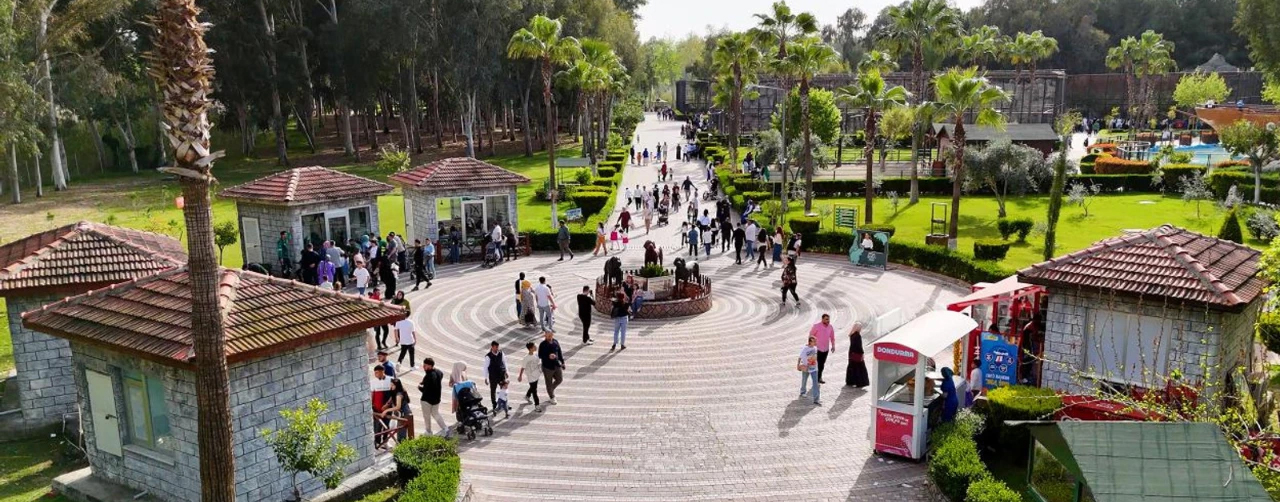
Since Tarsus is a large district, it hosts many places to visit. Therefore, you may want to extend your trip by choosing from Tarsus hotels. One of the places you should see while staying in the district is the zoo. Tarsus Zoo stands out as a place that instills a love of nature and animals, especially for families with children. This garden, which hosts various animal species, is also preferred for educational trips especially for students in the region. The zoo offers the opportunity to observe natural life closely and offers its visitors the opportunity to spend a pleasant day with its peaceful environment. The green areas around it also provide the opportunity to have a picnic. In addition, events are organized to develop children’s love of animals by interacting with animals one-on-one.
Saint Paul Church is one of the most striking religious and historical structures in Tarsus. Located in Tarsus, the city where Saint Paul, one of the important figures of Christianity, was born, this church stands out with both its spiritual meaning and architectural beauty. The church, thought to have been built in the Middle Ages, has undergone various restorations and is not currently open for active worship. However, the church, which is open to tourists, attracts great attention, especially from Christian pilgrims. The courtyard and interior of the church are decorated with religious works of art and frescoes. Saint Paul Church represents an important point in Tarsus in terms of religious tourism.
One of the educational structures in Tarsus from the Ottoman period is the Kubat Pasha Madrasa. Built in 1557 during the Ramazanoğlu Principality, this madrasa was used as an important center for religious education. The large courtyard, arched entrances and stonework of the structure, which draws attention with its architecture, are quite impressive. The madrasa, which hosts visitors with its historical atmosphere today, is also a structure that keeps Tarsus’ cultural heritage alive. The Kubat Pasha Madrasa is an important stop for those who wonder how science and religion were taught together during the Ottoman period. The madrasa also attracts attention with its architectural beauty and historical importance.
Tarsus Ancient Theater is known as an important archaeological site bearing traces of the Roman period. This theater, which was one of the centers of Tarsus’ cultural life in ancient times, was built with a capacity to accommodate thousands of people. The theater, which is largely excavated today, impresses visitors with its structures that shed light on history. The findings obtained during the excavations carried out in the theater provide information especially about the Roman domination in the region. When you visit the structure, you can follow the traces of the past by walking on the steps of the theater. It should be noted that it is an impressive tour point, especially if you are interested in ancient times.
The historical houses lined up on the narrow streets of Tarsus reveal the city’s architectural heritage dating back to the Ottoman and Republic periods. Wooden structures, ornate windows and large courtyards are among the characteristic features of these houses. You can experience nostalgia in its most beautiful form in these houses that have survived to the present day while preserving their historical texture. Some of the houses are used today as museums or centers where cultural events are organized. Tarsus Historical Houses are also a fascinating tour stop for those who want to take photos and feel the past.
Makam-ı Danyal Mosque is one of the most important structures in Tarsus, both religiously and historically. According to belief, the tomb under the mosque belongs to the Prophet Danyal. The tomb inside the mosque is a place of respect for both Muslims and tourists from other religions. The mosque, which bears traces of Ottoman architecture, draws attention especially with its interior stonework and large courtyard. This mosque, visited by those seeking spiritual peace, also forms part of Tarsus’ rich religious heritage.
The Justinian Bridge is one of the most impressive structures in Tarsus from the Roman and Byzantine periods. Built during the reign of the Byzantine Emperor Justinian, this bridge is located on the Berdan River and was an important route for both trade and military passages. This structure, which has survived for centuries, is remarkable for its architecture and durability. The bridge has undergone various restorations throughout its history and is still open to visitors today. A fascinating stop for history enthusiasts, the Justinian Bridge is a structure that reflects the deep-rooted history of Tarsus from ancient times to modern times.
Tarsus Nature Park is an area close to the city center and attracts attention with its natural beauty. This park is an area frequently visited by families, especially on weekends, and you can walk on the walking paths or have a picnic. The park, which is an ideal place for those who want to spend peaceful time in nature, offers its visitors the opportunity to rest and relax with its green areas. It also hosts various plant species and offers an area of discovery for nature lovers. We can say that Tarsus Nature Park is a place not to be missed for those who want to get away from city life and enjoy nature.